Quick Answer
Online reviews influence 93% of consumer purchasing decisions, with 91% of consumers trusting reviews as much as personal recommendations. A one-star increase in rating generates 5-9% revenue growth, while 53% of customers expect businesses to respond to negative reviews within a week. Mobile searchers are 73% more likely to visit a business with complete review profiles. Reviews don't just reflect reputation—they actively shape consumer psychology, search rankings, and purchasing behavior at every stage of the buyer journey.
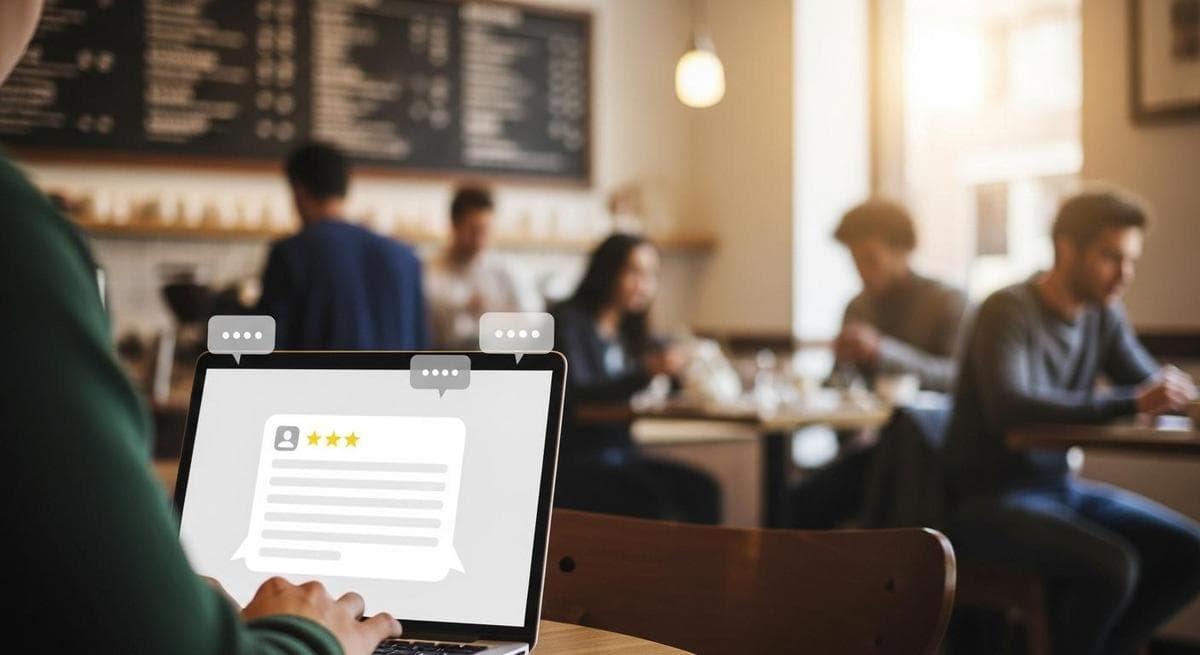
I was grabbing coffee last Tuesday when I overheard something that perfectly captures the modern consumer mindset. A woman at the next table was planning a birthday dinner for her mom. She'd narrowed it down to three restaurants. How was she deciding? "This one has better reviews," she told her friend, "but I want to see how they respond to the bad ones. That's how you know if they actually care."
She eventually chose the restaurant with the slightly lower star rating (4.4 vs 4.6) but more thoughtful responses. Her reasoning? "At least they're paying attention."
This casual conversation illustrates something profound: reviews have evolved from simple reputation signals into complex trust currencies that shape consumer decisions in ways most business owners don't fully appreciate.
The Psychology Behind Why Reviews Matter
To understand review impact, we need to look at the psychological mechanisms at play. It's not just about stars—it's about human decision-making shortcuts.
Social Proof: The Herd Instinct
Humans are social creatures. When we see others choosing something—whether it's a restaurant, dentist, or software tool—we assume it's the safe choice. This is social proof, and reviews are its purest digital form.
I saw this play out with a boutique fitness studio I consulted for. They had incredible equipment, talented trainers, and competitive pricing. But their Google listing showed only 12 reviews. A competitor down the street—arguably inferior in every tangible way—had 147 reviews. Guess who was winning the "which gym should I join?" search battle?
The psychology is simple: abundance signals popularity, and popularity signals safety.
The Trust Transfer Phenomenon
Here's what fascinates me: consumers trust strangers' reviews almost as much as personal recommendations. A 2024 BrightLocal study found that 91% of consumers trust online reviews as much as recommendations from friends or family.
Think about that. Someone reading a review from "Mike from Ohio" who they'll never meet trusts that opinion nearly as much as their best friend's recommendation. That's the power of perceived authenticity in anonymous peer feedback.
Negativity Bias: Why Bad Reviews Stick
Evolutionarily, we're wired to pay more attention to threats than opportunities. One negative review often carries more psychological weight than five positive ones. Studies show consumers spend 5x longer reading negative reviews than positive ones.
But here's the twist: negative reviews actually increase trust when they're present alongside positive ones. A perfect 5.0 rating with 50 reviews looks suspicious. A 4.6 with thoughtful responses to negatives? That's credible.
The Expectation-Confirmation Cycle
Reviews don't just inform decisions—they shape expectations. When customers read reviews before visiting, they arrive with pre-formed expectations. If the experience matches or exceeds those expectations (based on reviews), they're more likely to leave positive reviews themselves. The cycle perpetuates.
A restaurant owner in Austin told me something revealing: "After we started responding to every review, our average rating went up—not because we got better, but because customers arrived expecting us to care, and we delivered on that expectation."
By the Numbers: 2026 Review Statistics
Let's look at the hard data. These statistics come from aggregated studies by BrightLocal, Yelp, Google, and independent consumer research firms throughout 2025-2026.
| Metric | Statistic | Business Impact |
|---|---|---|
| Overall Influence | 93% of consumers use reviews to make purchasing decisions | Nearly universal impact across all industries |
| Trust Level | 91% trust reviews as much as personal recommendations | Reviews = word-of-mouth at scale |
| Reading Behavior | 76% read reviews regularly | Reviews are now standard research behavior |
| Minimum Threshold | 68% won't consider businesses with < 4 stars | Star rating acts as a filter |
| Review Quantity Matters | 54% expect 40+ reviews to trust a business | Volume signals legitimacy |
| Recency Bias | 73% consider only reviews from last 6 months | Old reviews lose relevance quickly |
| Response Expectation | 53% expect businesses to respond to negative reviews within a week | Silence = indifference |
| Response Impact | 45% more likely to visit if business responds to reviews | Active engagement signals care |
| Mobile Searchers | 73% more likely to visit businesses with complete review profiles | Reviews critical for local SEO |
| Revenue Impact | 1-star increase = 5-9% revenue growth | Direct bottom-line correlation |
| Average Review Count | Top-ranking local businesses have 47% more reviews than competitors | Quantity correlates with visibility |
| Negative Review Power | 94% avoid businesses with negative reviews | One bad review can cost dozens of customers |
| Photo Reviews | Reviews with photos get 2.3x more engagement | Visual proof amplifies impact |
| Multi-Platform Check | 82% check 2+ review platforms before deciding | Can't rely on single platform |
| Fake Review Awareness | 31% are skeptical of businesses with only 5-star reviews | Perfection looks suspicious |
One statistic that always shocks business owners: 53% of consumers expect a response to negative reviews within a week, yet only 33% of businesses respond to any reviews at all. That's a massive opportunity gap.
How Reviews Impact Each Stage of the Customer Journey
Reviews aren't just a final decision checkbox—they influence consumers at every stage. Let me walk you through the typical journey.
Stage 1: Awareness ("I Need a [Service]")
When consumers first realize they need something—a dentist, a plumber, a birthday gift—they usually start with a broad search. At this stage, review quantity matters most.
A law firm with 8 reviews gets filtered out. One with 80 reviews catches attention. The consumer hasn't read a single review yet, but they're already influenced by the social proof signal.
Key Insight: Businesses with fewer than 20 reviews often don't even make it to the consideration set, regardless of their star rating.
Stage 2: Consideration ("Who Should I Choose?")
Now the consumer has 3-5 options. They start reading reviews in detail. This is where quality, specificity, and recency matter.
- A review from 3 months ago about "great service" carries less weight than one from 3 days ago
- A vague "They were great" review is less persuasive than "Dr. Martinez explained my options clearly and the front desk helped with insurance"
- They're looking for reviews that mention their specific concern (price, quality, speed, etc.)
I watched my sister choose a pediatrician this way. She ignored the top-rated one (4.9 stars) because recent reviews mentioned "rushed appointments." Instead, she chose a 4.6-star doctor whose reviews specifically praised "taking time to answer questions." Her priority was time and attention, not perfect scores.
Stage 3: Validation ("Is This the Right Choice?")
Before committing, consumers look for reassurance. They check:
- How recent are the reviews? (Last 3 months matter most)
- Does the business respond to reviews? (Active engagement = alive and caring)
- Are there any deal-breaker complaints? ("Wait times are always 2+ hours" might eliminate a option)
- What do photos show? (Visual confirmation of claims)
This is where review responses become crucial. A thoughtful response to a negative review can neutralize its impact entirely. I've seen consumers choose businesses specifically because of how professionally they handled criticism.
Stage 4: Post-Purchase ("Will I Review This?")
The cycle continues. After their experience, customers compare it to what reviews promised:
- If experience > expectations (based on reviews) = positive review likely
- If experience = expectations = neutral or no review
- If experience < expectations = negative review likely
This is why managing expectations through accurate review responses is so important. Over-promising in responses sets you up for disappointment.
The Platform Divide: Where Reviews Matter Most
Not all review platforms are equal. Consumer behavior varies significantly by platform.
Google Reviews: The Discovery Engine
- User Intent: High commercial intent (actively searching for services)
- Average Rating Weight: High—often the first thing seen in search results
- Response Impact: Critical—Google displays your responses publicly
- Best For: Local SEO, service businesses, immediate purchase decisions
Google reviews directly influence local pack rankings (the map results). I've tracked businesses jumping from position 8 to position 3 in local search simply by improving their review velocity and response rate.
Yelp: The Restaurant Authority
- User Intent: Dining and entertainment decisions
- Average Rating Weight: Very high—Yelp users are review-focused
- Response Impact: Moderate—less visibility but loyal user base
- Best For: Restaurants, bars, local experiences
Yelp users read more reviews per decision (average 7.2) than any other platform. They're thorough researchers.
Facebook: The Social Proof Platform
- User Intent: Social validation, recommendations from friends
- Average Rating Weight: Moderate—mixed with social content
- Response Impact: Moderate—visible to social network
- Best For: Community businesses, lifestyle brands
Facebook reviews carry extra weight when they come from friends or when friends have engaged with the business.
Industry-Specific Platforms
Healthcare: Healthgrades, RateMDs
Legal: Avvo, Lawyers.com
Real Estate: Zillow, Realtor.com
Home Services: Angi, HomeAdvisor
These platforms have highly qualified audiences. A review on Healthgrades from someone researching knee surgery is worth 5x a casual Google review.
Industry Variations: How Review Impact Differs
Review influence isn't uniform across industries. Here's how it breaks down:
High-Impact Industries (Reviews Make or Break)
- Restaurants: 97% of diners read reviews before trying a new place
- Healthcare: 84% of patients use reviews to choose providers
- Legal Services: 82% check reviews before hiring attorneys
- Home Services: 91% read reviews for contractors, plumbers, etc.
- Hotels/Travel: 93% won't book without reading reviews
Moderate-Impact Industries (Reviews Influence but Aren't Everything)
- Retail: 67% check reviews, but convenience and price often win
- Professional Services: 71% influenced, but referrals still dominate
- Automotive: 74% research, but location and availability matter
Emerging High-Impact Categories
- Software/SaaS: G2 and Capterra reviews increasingly drive B2B decisions
- Online Education: Course reviews determine enrollment
- Financial Services: Growing review influence as millennials become dominant consumers
The Dark Side: Fake Reviews and Consumer Skepticism
It wouldn't be honest to talk about review impact without addressing the elephant in the room: fake reviews. Consumer awareness of fake reviews is at an all-time high, and it's changing behavior.
The Fake Review Problem
- Google removed 170 million fake reviews in 2024
- Consumers report 31% of reviews look suspicious
- "Review gating" (filtering for positive reviews) is now prohibited by most platforms
How Consumers Spot Fakes
- Perfect 5.0 ratings with no negatives
- Generic language ("Great service, highly recommend")
- Bursts of reviews on the same dates
- Profiles with only 1-2 reviews total
- No responses from the business
The Authenticity Advantage
Here's the opportunity: authenticity is now a competitive differentiator. Businesses that show real reviews—including thoughtful negative ones—and respond authentically win trust.
A spa owner I worked with struggled with a 3.8-star rating while competitors boasted 4.8+. But when we analyzed her actual customer retention, it was higher than the "perfect" competitors. Her reviews were authentic, her responses were genuine, and customers who did choose her became loyal advocates. She stopped chasing stars and started showcasing her real story.
Behavioral Insights: How Consumers Actually Read Reviews
Reading reviews isn't linear. Consumers have specific patterns:
The "Sort by Negative" Pattern
68% of consumers filter to see 1-3 star reviews first. They want to know what could go wrong before committing. If the negative reviews mention issues they can live with ("Small parking lot" for a restaurant with amazing food), they convert. If they mention deal-breakers ("Rude staff"), they bounce.
The "Response Reading" Habit
Here's a stat that shocked me: consumers spend more time reading business responses than the reviews themselves. Your response to a 2-star review gets more attention than the review. This is why tools like Replifast that help you respond thoughtfully and quickly are so valuable.
The "Photo Proof" Expectation
Reviews with photos get 2.3x more engagement. Consumers trust visual evidence. A review saying "The hotel room was dirty" with a photo converts browsers away faster than 10 written complaints. Conversely, a positive review with photos of delicious food drives reservations.
The Recency Filter
73% of consumers ignore reviews older than 6 months. A business with 100 five-star reviews from 2020 but only 3 from 2026 looks stale. Continuous review generation matters more than historical volume.
Frequently Asked Questions
How many reviews do I need to be credible?
The threshold varies by industry, but 40+ reviews is the general credibility point. However, recency matters more than quantity—10 recent reviews beat 50 old ones. Aim for 5-10 new reviews monthly to signal active, current quality.
Is a 4.6 rating better than a 5.0?
Often, yes. A perfect 5.0 with 20+ reviews looks suspicious to 31% of consumers. A 4.5-4.7 with thoughtful responses to negatives appears more authentic and trustworthy. The sweet spot is 4.5-4.8 with active engagement.
Do fake reviews actually work?
Short-term, maybe. Long-term, absolutely not. Platforms are aggressively removing fakes (170M+ deleted by Google in 2024), and consumer detection skills are improving. More importantly, fake reviews create unrealistic expectations that lead to real negative reviews when the business can't deliver.
How fast should I respond to reviews?
For negative reviews: within 24-48 hours. For positive reviews: within 1-3 days. Google tracks response time as a ranking factor, and 53% of consumers expect week-long maximum response times to negatives. Speed signals attentiveness.
Which review platform matters most?
Google for local businesses (impacts search rankings), Yelp for restaurants/entertainment, industry-specific platforms for professional services. Most consumers check 2+ platforms, so you need a multi-platform strategy. Tools like Replifast help manage them all.
In Summary
- 93% of consumers use reviews to make purchasing decisions—nearly universal impact
- 91% trust reviews as much as personal recommendations—strangers carry surprising weight
- 1-star rating increase correlates with 5-9% revenue growth—direct financial impact
- Reviews influence every stage: awareness (quantity), consideration (quality), validation (responses)
- 68% filter for negative reviews first—they want to know risks before committing
- Business responses get more attention than the reviews themselves—engagement is critical
- Recency trumps quantity—10 recent reviews beat 50 old ones
- Authenticity beats perfection—4.6 with real responses beats 5.0 with suspicious silence
- 53% expect responses to negatives within a week—silence costs customers
- Google reviews drive local search rankings—visibility depends on review strategy
The woman at the coffee shop chose the restaurant with the 4.4-star rating because she saw human engagement. In 2026, that's the winning formula: not perfect scores, but authentic presence. Reviews aren't just reputation mirrors—they're trust-building conversations with every potential customer who finds you online.
And those conversations? They're happening whether you participate or not. The businesses winning today are the ones listening, responding, and treating every review as the valuable customer insight it is.